
Fall 2025 International Logistics
| Program Overview | ||
|---|---|---|
| Program Title | Fall 2025 International Logistics | |
| Organization | Ferris State University | |
| # of Students Enrolled |
1
|
|
| # of Projects Running |
3 Project/s Added (of 1 Project Expected)
|
|
|
Program Timeline Project Duration |
Start Date: 10/06/25 End Date: 11/09/25 1 month |
|
| Collaboration Overview | ||
|---|---|---|
| About Students |
Students are upper-level undergraduates studying International Business. Most are juniors or seniors and have completed coursework in global business, international trade, and cultural fluency. They’re trained to approach global commerce through the lens of operations, documentation, and risk. By the time of the capstone, students will have covered:
Student Level: Bachelor Degree Student Time Commitment: Full Time Team Structure: 3 - 4 |
|
| Program Goals | Students will:
|
|
| Format Structure |
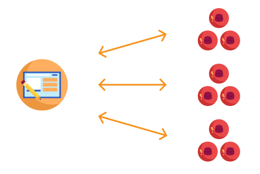
Single Project Multiple Teams |
|
| Format Title | Live Case | |
| Format Description |
INTB 320 – International Logistics is a core course in Ferris State University's International Business curriculum, designed to give students a foundational understanding of cross-border trade operations and global supply chain systems. To bring this material to life, the program is integrating a 4-week industry-sponsored live case, where students will solve real-world logistics challenges in small teams. Several teams (3–5 students each team) will work remotely on a scoped project with periodic faculty guidance and limited sponsor touchpoints. Projects are structured to align with topics covered in the course, including trade terms, transportation methods, international documentation, and logistics risk. Key Benefits to Sponsors:
|
|
| Benefits For Industry Partners | ||
| Project Modality | Fully Remote | |
| Industry Partner Requirements to Participate | ||
|---|---|---|
| Project Topics | Crisis and Disaster Management Economic Development, Work and Occupations Employee and Labor Management Growth Strategy International Affairs Inventory Management Legal, Regulatory, Compliance Market Research Marketing Mergers & Acquisitions Operations Purchasing, Logistics, Supply Chain Reporting, Financial Planning & Analysis Sales & Business Development Strategic Planning | |
| Target Industries | Aerospace & Defense Biotech & Pharmaceuticals Fashion & Apparel Government Manufacturing & Industrial Retail & E-Commerce Transportation & Logistics | |
| Skills & Expertise | Air Freight Cargo Insurance Cross-Border Compliance Customs Clearance Documentation Flowcharts ERP Export Packaging Freight Routing Global Warehousing Google Slides Import/Export Strategy Incoterms International Contracts Letters of Credit Microsoft Excel Multi-Modal Transport Ocean Freight PowerPoint Regulatory Research Shipment Tracking Supplier Vetting Supply Chain Infrastructure Supply Chain Management Tariffs Trade Risk Assessment | |
| Location Information & Preferences |
Local (within 30 miles) Course is offered fully online, and projects are designed for remote collaboration Sponsors can be located anywhere Expectations for sponsors:
Student teams will submit all deliverables virtually and present over Zoom |
|
| Sponsorship |
No Sponsorship Required |
|
| Compensation |
No Compensation Required |
|
| Other Requirements |
|
|
| Expected Time Commitment For Project Managers | 2 Hours per week | |
| Key Program Dates | Due Date |
|---|---|
|
Request for Proposal published
Collaboration request published. Industry Partners may express interest in participating.
|
Nov 18 2024, 03:21 PM UTC |
|
Interview
Educators will begin interviewing interested Industry Partners to discuss project ideas.
|
Dec 20 2024, 03:21 PM UTC |
|
Proposal Application Deadline
Final date for Industry Partners to express interest in participating.
|
Jul 15 2025, 03:21 PM UTC |
|
Finalize Project Charter
Educators and Industry Partners finalize project charters, legal documents, and background materials.
|
Jul 30 2025, 03:21 PM UTC |
|
Official Program Launch
We’ll find a time on this day for you to meet with the students to kick off your project.
|
Oct 06 2025 |
|
Official Program End
We’ll find a time on this day for you to meet with the students to wrap up your project.
|
Nov 09 2025 |
Project Overview
| Project Details | |
|---|---|
| Project Title | Optimizing Loop Earplugs' Return Policy |
| Project Synopsis |
What is the challenge or opportunity you are trying to address within your organization? Loop Earplugs has established itself as a leader in providing high-quality earplug solutions, known for their innovative design and effectiveness in various environments. However, the company faces a significant challenge in establishing a physical return policy that is both customer-friendly and cost-effective. The current approach of allowing customers to give away products to friends and family has led to hygiene concerns and financial strain due to high return costs. As the company transitions to a more structured return policy, it is imperative to develop a system that mitigates these issues while preventing fraud.
What are some of the activities or action items you think will need to be taken to achieve your desired results?
What would make this project a success for your organization? What measurable results are you looking to accomplish?
|
| Compensation |
|
| Sponsorship |
No Sponsorship Required |
| Resources |
Program Timeline
|
Due Date
|
Activities |
Deliverables
|
Status
|
Action | |
|---|---|---|---|---|---|
|
Fri, 10/03/25
5:30 AM
ET
|
Program Kickoff
|
No Deliverables
No deliverables are required for this action item.
|
|||
|
Location: Virtual
|
|||||
Projects
| Project | Organization | Topics |
|---|---|---|
| Optimizing Loop Earplugs' Return Policy | Loop Earplugs | Purchasing, Logistics, Supply Chain |
| Optimizing 3PL Partnerships for Loop Earplugs | Loop Earplugs | Purchasing, Logistics, Supply Chain |
| Scaling Personalized Orders at Loop | Loop Earplugs | Purchasing, Logistics, Supply Chain |
Program Managers
| Name | Organization |
|---|---|
| Leslie Sukup | Saint Leo University |
Teams
| Team Name | Project Name | Team Members |
|---|---|---|
| Future-Proofing Loop's Return Policy | Optimizing Loop Earplugs' Return Policy | |
| Scaling Personalized Orders at Loop | Optimizing 3PL Partnerships for Loop Earplugs | |
| Scaling Personalized Orders at Loop | Scaling Personalized Orders at Loop |